Iranian president declares end to ISIS

Reuters

Iran’s Rouhani declares end of Islamic State group

BEIRUT, Nov 21 (Reuters) – Iranian President Hassan Rouhani declared the end of Islamic State on Tuesday while a senior military commander thanked the “thousands of martyrs” killed in operations organized by Iran to defeat the militant group in Syria and Iraq.

“Today with God’s guidance and the resistance of people in the region we can say that this evil has either been lifted from the head of the people or has been reduced,” Rouhani said in an address broadcast live on state TV.

“Of course the remnants will continue but the foundation and roots have been destroyed.”

Major General Qassem Soleimani, a senior commander of the elite Revolutionary Guards, also said Islamic State had been defeated, in a message sent on Tuesday to Iran’s supreme leader which was published on the Guards’ news site, Sepah News.


Supreme Leader Ayatollah Ali Khamenei congratulated Soleimani on the defeat of Islamic State and said it was a blow against Israel, America and its allies, an allusion to Saudi Arabia.

“It was a blow against the past and current governments of America and the regimes linked to it in the region who created this group and gave them every kind of support so they could expand their malevolent power in west Asia,” Khamenei said in a statement published on his official website.

In June Islamic State carried out its first attack in Iran, killing 18 people in Tehran, testing the government’s belief that by backing offensives against the group elsewhere in the region it could keep the militant group away from Iran.

Iran's President Hassan Rouhani (C) welcomed at Vnukovo airport.© Stanislav Krasilnikov\TASS via Getty Images Iran’s President Hassan Rouhani (C) welcomed at Vnukovo airport.FRONTLINE POSITIONS

Iranian media have often carried video and pictures of Soleimani, who commands the Quds Force, the branch of the Guards responsible for operations outside Iran, at frontline positions in battles against Islamic State in Iraq and Syria.

The Revolutionary Guards, a powerful military force which also oversees an economic empire worth billions of dollars, has been fighting in support of Syrian President Bashar al-Assad and the central government in Baghdad for several years.

More than 1,000 members of the Guards, including senior commanders, have been killed in Syria and Iraq.

The Syrian conflict has entered a new phase with the capture at the weekend by government forces and their allies of Albu Kamal, the last significant town in Syria held by Islamic State, where Soleimani was pictured by Iranian media last week.

Iraqi forces captured the border town of Rawa, the last remaining town there under Islamic State control, on Friday, signaling the collapse of the so-called caliphate it proclaimed in 2014 across vast swathes of Iraqi and Syrian territory.

Most of the forces battling Islamic State in Syria and Iraq have said they expect it to go underground and turn to a guerrilla insurgency using sleeper cells and bombings.

In his address on Tuesday, Rouhani accused the United States and Israel of supporting Islamic State. He also criticized Arab powers in the region and asked why they had not spoken out about civilian deaths in Yemen’s conflict.

The foreign ministers of Saudi Arabia and other Arab states criticized Iran and its Lebanese Shi’ite ally Hezbollah at an emergency meeting in Cairo on Sunday, calling for a united front to counter Iranian interference.

“DEFENDERS OF THE SHRINE”

Soleimani acknowledged the multinational force Iran has helped organize in the fight against Islamic State and thanked the “thousands of martyrs and wounded Iranian, Iraqi, Syrian, Afghan and Pakistani defenders of the shrine.”

He pointed to the “decisive role” played by Hezbollah and the group’s leader Seyed Hassan Nasrallah and highlighted the thousands of Iraqi Shi’ite volunteers, known as the Popular Mobilisation Forces, who have fought Islamic State in Iraq.

On websites linked to the Guards, members of the organization killed in Syria and Iraq are praised as protectors of Shi’ite holy sites and labeled “defenders of the shrine.”

Rouhani is scheduled to meet Russian President Vladimir Putin and Turkish leader Tayyip Erdogan in Russia on Wednesday to discuss the Syria conflict.

The Revolutionary Guards initially kept quiet about their military role in both Syria and Iraq but have become more outspoken about it as casualties have mounted. They frame their engagement as an existential struggle against the Sunni Muslim fighters of Islamic State, who see Shi’ites, the majority of Iran’s population, as apostates.

Last month, U.S. President Donald Trump gave the U.S. Treasury Department authority to impose economic sanctions on Guards members in response to what Washington calls its efforts to destabilize and undermine its opponents in the Middle East.

Orthodox Christians and 21st Century Arguments

By Pew Research

Key takeaways about Orthodox Christians

A woman lights a prayer candle at an Orthodox church in Moscow. (Spencer Platt/Getty Images)


Orthodoxy is the third-largest branch of Christianity, after Catholicism and Protestantism. Today, there are approximately 260 million Orthodox Christians in the world, according to a new Pew Research Center report.

Orthodoxy, or Eastern Christianity, formally split from Roman Catholicism (known then as Western Christianity) in 1054 over a host of theological issues, high among them disputes over papal authority.

Here are key takeaways about Orthodox Christians, based on the report:

1Orthodox Christians have decreased as a share of the overall Christian population even as their numbers have more than doubled since 1910, when there were 125 million of them. This decrease in share is due to the fact that the worldwide populations of Catholics, Protestants and other Christians have collectively almost quadrupled over the last century (from 490 million in 1910 to 1.9 billion in 2010). Roughly one-in-eight Christians (12%) are now Orthodox, down from one-in-five (20%) in 1910.

2More than three-quarters (77%) of Orthodox Christians around the world live in Europe, although there is a considerable Orthodox population in Ethiopia (36 million). This is in marked contrast to the geographical distribution of Catholics and Protestants, just 24% and 12% of whom live in Europe, respectively. A majority of Catholics and Protestants now live in Latin America, sub-Saharan Africa or the Asia-Pacific region. In 1910, roughly half or more of Christians in all three traditions lived in Europe.

3Most Orthodox Christians live in countries that were behind the Iron Curtain during the Soviet era and, by several standard measures, they exhibit relatively low levels of religiosity. This is especially true for Orthodox Christians living in former Soviet republics. In Russia, which has the world’s largest Orthodox population (101 million), just 6% of Orthodox Christians say they attend church at least once a week, 15% say religion is “very important” in their lives and 18% say they pray daily. Bucking this trend, again, is Ethiopia, where 78% of Orthodox Christians say they attend religious services at least weekly, 98% say religion is “very important” in their lives and 65% say they pray daily.

4The vast majority of Orthodox Christians around the world say homosexuality should not be accepted by society. In nearly every country surveyed, with the exception of Greece and the United States, Orthodox majorities feel this way. These views are particularly strong among Orthodox populations in former Soviet republics. Orthodox majorities in the countries surveyed also oppose the legalization of same-sex marriage, although the U.S. is an exception to this pattern.

5Few Orthodox Christians say they want to be reunited with the Roman Catholic Church. The view that Eastern Orthodoxy and Roman Catholicism should reconcile is a minority position in every Orthodox population surveyed across Central and Eastern Europe, except Romania. At the same time, many Orthodox Christians declined to answer this question, perhaps reflecting ambivalence about the topic. Catholics in the region are about as likely as Orthodox Christians to favor their two churches being in communion again (medians of 38% and 35%, respectively). Still, Orthodox and Catholic majorities in most countries surveyed say the two religious traditions have “a lot in common” with each other.

6Orthodox Christians broadly support their church’s prohibition on women’s ordination to the priesthood. More Orthodox Christians favor this church stance than oppose it in most countries surveyed. For instance, in Ethiopia, 89% of Orthodox Christians support the prohibition on women’s ordination and just 7% oppose it. And in Romania, 74% of Orthodox Christians favor the church position and 22% oppose it. Orthodox women tend to be as likely as Orthodox men to be against the ordination of women.

Correction: The chart “Relatively low shares of Orthodox and Catholics favor Eastern Orthodoxy and Roman Catholicism being in communion” has been updated to correct the share of Catholics in Bosnia saying the two churches should be in commun

How the CIA Staged Sham Academic Conferences to defect Scientists

ProPublica

A decade ago, the CIA secretly funded conferences to lure Iranian scientists to defect. If President Trump scuttles the Iranian nuclear agreement, the agency may seek more defectors — and orchestrate more such “conferences.”

Lee Martin/Guardian Design

This is an edited excerpt from “Spy Schools: How the CIA, FBI, and Foreign Intelligence Secretly Exploit America’s Universities,” by senior editor Daniel Golden. The excerpt was co-published with The Guardian.

The CIA agent tapped softly on the hotel room door. After the keynote speeches, panel discussions and dinner, the conference attendees had retired for the night. Audio and visual surveillance of the room showed that the nuclear scientist’s minders from the Islamic Revolutionary Guard Corps were sleeping but he was still awake. Sure enough, he opened the door, alone.

According to a person familiar with this encounter, which took place about a decade ago, the agency had been preparing it for months. Through a business front, it had funded and staged the conference at an unsuspecting foreign institution of scientific research, invited speakers and guests, and planted operatives among the kitchen workers and other staff, just so it could entice the nuclear expert out of Iran, separate him for a few minutes from his guards, and pitch him one-on-one. A last-minute snag had almost derailed the plans: The target switched hotels because the conference’s preferred hotel cost $75 more than his superiors in Iran were willing to spend.

To show his sincerity and goodwill, the agent put his hand over his heart. “Salam habibi,” he said. “I’m from the CIA, and I want you to board a plane with me to the United States.” The agent could read the Iranian’s reactions on his face: a mix of shock, fear and curiosity. From prior experience with defectors, he knew the thousand questions flooding the scientist’s mind: What about my family? How will you protect me? Where will I live? How will I support myself? How do I get a visa? Do I have time to pack? What happens if I say no?

The scientist started to ask one, but the agent interrupted him. “First, get the ice bucket,” he said.

“Why?”

“If any of your guards wake up, you can tell them you’re going to get some ice.”


In perhaps its most audacious and elaborate incursion into academia, the CIA secretly spent millions of dollars staging scientific conferences around the world. Its purpose was to lure Iranian nuclear scientists out of their homeland and into an accessible setting where its intelligence officers could approach them individually and press them to defect. In other words, the agency sought to delay Iran’s development of nuclear weapons by exploiting academia’s internationalism, and pulling off a mass deception on the institutions that hosted the conferences and the professors who attended and spoke at them. The people attending the conference had no idea they were acting in a drama that simulated reality but was stage-managed from afar. Whether the national security mission justified this manipulation of the professoriate can be debated, but there’s little doubt that most academics would have balked at being dupes in a CIA scheme.

More than any other academic venue, conferences lend themselves to espionage. Assisted by globalization, these social and intellectual rituals have become ubiquitous. Like stops on the world golf or tennis circuits, they sprout up wherever the climate is favorable, and draw a jet-setting crowd. What they lack in prize money, they make up for in prestige. Although researchers chat electronically all the time, virtual meetings are no substitute for getting together with peers, networking for jobs, checking out the latest gadgets, and delivering papers that will later be published in volumes of conference proceedings. “The attraction of the conference circuit,” English novelist David Lodge wrote in “Small World,” his 1984 send-up of academic life, is that “it’s a way of converting work into play, combining professionalism with tourism, and all at someone else’s expense. Write a paper and see the world!”

The importance of a conference may be measured not only by the number of Nobel Prize winners or Oxford dons it attracts, but by the number of spies. U.S. and foreign intelligence officers flock to conferences for the same reason that Army recruiters concentrate on low-income neighborhoods: They make the best hunting grounds. While a university campus may have only one or two professors of interest to an intelligence service, the right conference — on drone technology, perhaps, or ISIS — may have dozens.

“Every intelligence service in the world works conferences, sponsors conferences, and looks for ways to get people to conferences,” says a former CIA operative.

“Recruitment is a long process of seduction,” said Mark Galeotti, senior researcher at the Institute of International Relations Prague and former special adviser to the British foreign office. “The first stage is to arrange to be at the same workshop as a target. Even if you just exchange banalities, the next time you can say, ‘Did I see you in Istanbul?’”

The FBI warned American academics in 2011 to be cautious about conferences, citing this scenario: “A researcher receives an unsolicited invitation to submit a paper for an international conference. She submits a paper and it is accepted. At the conference, the hosts ask for a copy of her presentation. The hosts hook a thumb drive to her laptop, and unbeknownst to her, download every file and data source from her computer.”

The FBI and CIA swarm conferences, too. At gatherings in the United States, says a former FBI agent, “foreign intelligence officers try to collect Americans; we try to collect them.” The CIA is involved with conferences in various ways: It sends officers to them; it hosts them through fronts in the Washington area, so that the intelligence community can tap academic wisdom; and it mounts sham conferences to reach potential defectors from hostile countries.

The CIA monitors upcoming conferences worldwide and identifies those of interest. Suppose there is an international conference in Pakistan on centrifuge technology: The CIA would send its own agent undercover, or enlist a professor who might be going anyway to report back. If it learns that an Iranian nuclear scientist attended the conference, it might peg him for possible recruitment at the next year’s meeting.

Intelligence from academic conferences can shape policy. It helped persuade the George W. Bush administration — mistakenly, as it turned out — that Saddam Hussein was still developing weapons of mass destruction in Iraq. “What our spies and informants were noticing, of course, was that Iraqi scientists specializing in chemistry, biology, and, to a lesser extent, nuclear power kept showing up at international symposia,” former CIA counterterrorism officer John Kiriakou wrote in a 2009 memoir. “They presented papers, listened to the presentation of others, took copious notes, and returned to Jordan, where they could transmit overland back to Iraq.”

Some of those spies may have drawn the wrong conclusions because they lacked advanced degrees in chemistry, biology or nuclear power. Without expertise, agents may misunderstand the subject matter, or be exposed as frauds. At conferences hosted by the International Atomic Energy Agency in Vienna on topics such as isotope hydrology and fusion energy, “there’s probably more intelligence officers roaming the hallways than actual scientists,” says Gene Coyle, who worked for the CIA from 1976 to 2006. “There’s one slight problem. If you’re going to send a CIA guy to attend one of these conferences, he has to talk the talk. It’s hard to send a history major. ‘Yes, I have a PhD in plasma physics.’ Also, that’s a very small world. If you say you’re from the Fermi Institute in Chicago, they say, ‘You must know Bob, Fred, Susie.’”

Instead, Coyle says, the agency may enlist a suitable professor through the National Resources Division, its clandestine domestic service, which has a “working relationship” with a number of scientists. “If they see a conference in Vienna, they might say, ‘Professor Smith, that would seem natural for you to attend.’”

“Smith might say, ‘I am attending it, I’ll let you know who I chatted with. If I bump into an Iranian, I won’t run in the opposite direction.’ If he says, ‘I’d love to attend, but the travel budget at the university is pretty tight,’ the CIA or FBI might say, ‘Well, you know, we might be able to take care of your ticket, in economy class.’”


A spy’s courtship of a professor often begins with a seemingly random encounter — known in the trade as a “bump” — at an academic conference. One former CIA operative overseas explained to me how it works. I’ll call him “R.”

“I recruited a ton of people at conferences,” R told me. “I was good at it, and it’s not that hard.”

Between assignments, he would peruse a list of upcoming conferences, pick one, and identify a scientist of interest who seemed likely to attend after having spoken at least twice at the same event in previous years. R would assign trainees at the CIA and NSA to develop a profile of the target — educational background, college instructors and so on. Then he would cable headquarters, asking for travel funding. The trick was to make the cable persuasive enough to score the expense money, but not so compelling that other agents who read it, and were based closer to the conference, would try to preempt him.

Next he developed his cover — typically, as a businessman. He invented a company name, used GoDaddy.com to build a website and printed business cards. He created billing, phone and credit card records for the nonexistent company. For his name, he chose one of his seven aliases.

R was no scientist. He couldn’t drop in a line about the Riemann hypothesis as an icebreaker. Instead, figuring that most scientists are socially awkward introverts, he would sidle up to the target at the edge of the conference’s get-together session and say, “Do you hate crowds as much as I do?” Then he would walk away.

“The bump is fleeting,” R says. “You just register your face in their mind.”

No one else should notice the bump. It’s a rookie mistake to approach a target in front of other people who might be minders assigned by the professor’s own country. The minders would report the conversation, compromising the target’s security and making them unwilling or unable to entertain further overtures.

For the rest of the conference, R would “run around like crazy,” bumping into the scientist at every opportunity. With each contact, called “time on target” in CIA jargon and counted in his job performance metrics, he insinuated himself into the professor’s affections. For instance, having done his homework, R would say he had read a wonderful article on such-and-such topic but couldn’t remember the author’s name. “That was me,” the scientist would say, blushing.

After a couple of days, R would invite the scientist to lunch or dinner and make his pitch: His company was interested in the scientist’s work and would like to support it. “Every academic I have ever met is constantly trying to figure how to get grants to continue his research. That’s all they talk about.” They would agree on a specific project, and the price, which varied by the scientist’s country: “One thousand to five thousand dollars for a Pakistani. Korea is more.” Once the CIA pays foreign professors who are unaware at first of the funding source, it controls them, because exposure of the relationship might imperil their careers or even their lives in their native country.

Scientific conferences have become such a draw for intelligence agents that one of the biggest concerns for CIA operatives is interference from agency colleagues trapping the same academic prey. “We tend to flood events like these,” a former CIA officer who writes under the pseudonym Ishmael Jones observed in his 2008 book, “The Human Factor: Inside the CIA’s Dysfunctional Intelligence Culture.” At one 2005 conference in Paris that he anticipated would be a “perfect watering hole for visiting rogue state weapons scientists,” Jones recalled, his heart sank as he glanced across the room and saw two CIA agents (who were themselves professors). He avoided their line of sight while he roamed the gathering, eyeballing nametags and trawling for “people who might make good sources,” ideally from North Korea, Iran, Libya, Russia or China.


“I’m surprised there’s so much open intelligence presence at these conferences,” Karsten Geier said. “There are so many people running around from so many acronyms.” Geier, head of cybersecurity policy for the German foreign office, and I were chatting at the Sixth Annual International Conference on Cyber Engagement, held in April 2016 at Georgetown University in Washington, D.C. The religious art, stained-glass windows and classical quotations lining Gaston Hall enveloped the directors of the NSA and the FBI like an elaborate disguise as they gave keynote addresses on combating one of the most daunting challenges of the twenty-first century: cyberattacks.

The NSA’s former top codebreaker spoke, as did the ex-chairman of the National Intelligence Council, the deputy director of Italy’s security department and the director of a center that does classified research for Swedish intelligence. The name tags that almost all of the seven hundred attendees wore showed that they worked for the US government, foreign embassies, intelligence contractors, or vendors of cyber-related products, or they taught at universities.

Perhaps not all of the intelligence presence was open. Officially, 40 nations — from Brazil to Mauritius, Serbia to Sri Lanka — were represented at the conference, but not Russia. Yet, hovering in the rear of the balcony, a slender young man, carrying a briefcase, listened to the panels. No name tag adorned his lapel. I approached him, introduced myself and asked his name. “Alexander,” he said, and, after a pause, “Belousov.”

“How do you like the conference?”

“No,” he said, trying to ward off further inquiries. “I am from Russian embassy. I don’t have any opinions. I would like to know, that’s all.”

I proffered a business card, and requested his, in vain. “I am here only a month. My cards are still being produced.”

I persisted, asking about his job at the embassy. (A subsequent check of a diplomatic directory showed him as a “second secretary.”) He looked at his watch. “I am sorry. I must go.”


When the CIA wants Professor John Booth’s opinion, it phones him to find out if he’s available to speak at a conference. But the agency’s name is nowhere to be found on the conference’s formal invitation and agenda, which invariably list a Beltway contractor as the sponsor.

By hiding its role, the CIA makes it easier for scholars to share their insights at its conferences. They take credit for their presentations on their curriculum vitae without disclosing that they consulted for the CIA, which might alienate some academic colleagues as well as the countries where they conduct their research.

An emeritus professor of political science at the University of North Texas, Booth specializes in studying Latin America, a region where history has taught officials to be wary of the CIA. “If you were intending to return to Latin America, it was very important that your CV not reflect” these kinds of presentations, Booth told me in March 2016. “When you go to one of these conferences, if there are intelligence or defense agency principals there, it’s invisible on your CV. It provides a fig leaf for participants. There’s still some bias in academia against this. I don’t go around in Latin American studies meetings saying I spent time at a conference run by the CIA.”

The CIA arranges conferences on foreign policy issues so that its analysts, who are often immersed in classified details, can learn from scholars who understand the big picture and are familiar with publicly available sources. Participating professors are generally paid a $1000 honorarium, plus expenses. With scholarly presentations followed by questions and answers, the sessions are like those at any academic meeting, except that many attendees — presumably, CIA analysts — wear name tags with only their first names.

Of ten intelligence agency conferences that Booth attended over the years, most recently a 2015 session about a wave of Central American refugee children pouring into the United States, the CIA and Office of the Director of National Intelligence directly ran only one or two. The rest were outsourced to Centra Technology Inc., the leader of a growing industry of Beltway intermediaries — “cutouts,” in espionage parlance — that run conferences for the CIA.

The CIA supplies Centra with funding and a list of people to invite, who gather in Centra’s Conference Center in Arlington, Virginia. It’s “an ideal setting for our clients’ conferences, meetings, games, and collaborative activities,” according to Centra’s website.

“If you know anything, when you see Centra, you know it’s likely to be CIA or ODNI [Office of the Director of National Intelligence],” said Robert Jervis, a Columbia University professor of international politics and longtime CIA consultant. “They do feel that for some academics thin cover is useful.”

Established in 1997, Centra has received more than $200 million in government contracts, including $40 million from the CIA for administrative support, such as compiling and redacting classified cables and documents for the five-year Senate Intelligence Committee study of the agency’s torture program. As of 2015, its executive ranks teemed with former intelligence officials. Founder and chief executive Harold Rosenbaum was a science and technology adviser to the CIA. Senior vice president Rick Bogusky headed the Korea division at the Defense Intelligence Agency. Vice president for research James Harris managed analytic programs at the CIA for 22 years. Peggy Lyons, director of global access, was a longtime CIA manager and officer with several tours in East Asia. David Kanin, Centra analytic director, spent 31 years as a CIA analyst.

Like Booth, Indiana University political scientist Sumit Ganguly has spoken at several Centra conferences. “Anybody who works with Centra knows they’re in effect working for the U.S. government,” he said. “If it said CIA, there are others who would fret about it. I make no bones about it to my colleagues. If it sticks in their craw, it’s their tough luck. I am an American citizen. I feel I should proffer the best possible advice to my government.”

Another political scientist, who has given four presentations for Centra, said he was told that it represented unnamed “clients.” He didn’t realize the clients were US intelligence agencies until he noticed audience members with first-name-only name tags. He later ran into one or two of the same people at an academic conference. They weren’t wearing name tags and weren’t listed in the program.

Centra strives to mask its CIA connections. It removed its executives’ biographies from its website in 2015. The “featured customers” listed there include the Department of Homeland Security, the FBI, the Army and 16 other branches of the federal government — but not the CIA. When I phoned Rosenbaum and asked him about Centra holding conferences for the CIA, he said, “You’re calling the wrong person. We have nothing to do with that.” And then he hung up.

I dropped by Centra’s offices on the fifth floor of a building in Burlington, Massachusetts, a northern suburb of Boston. The sign-in sheet asked visitors for their citizenship and “type of visit”: classified or not. The receptionist fetched human resources director Dianne Colpitts. She politely heard me out, checked with Rosenbaum and told me that Centra wouldn’t comment.

“To be frank,” she said, “our customers prefer us not to talk to the media.”


For Iranian academics escaping to the West, academic conferences are a modern-day underground railroad. The CIA has taken full advantage of this vulnerability. Beginning under President George W. Bush, the U.S. government had “endless money” for covert efforts to delay Iran’s development of nuclear weapons, the Institute for Science and International Security’s David Albright told me. One program was the CIA’s Operation Brain Drain, which sought to spur top Iranian nuclear scientists to defect.

Because it was hard to approach the scientists in Iran, the CIA enticed them to academic conferences in friendly or neutral countries, a former intelligence officer familiar with the operation told me. In consultation with Israel, the agency would choose a prospect. Then it would set up a conference at a prestigious scientific institute through a cutout, typically a businessman, who would underwrite the symposium with $500,000 to $2 million in agency funds. The businessman might own a technology company, or the agency might create a shell company for him, so that his support would seem legitimate to the institute, which was unaware of the CIA’s hand. “The more clueless the academics are, the safer it is for everybody,” the ex-officer told me. Each cutout knew he was helping the CIA, but he didn’t know why, and the agency would use him only once.

The conference would focus on an aspect of nuclear physics that had civilian applications and also dovetailed with the Iranian target’s research interests. Typically, Iran’s nuclear scientists also held university appointments. Like professors anywhere, they enjoyed a junket. Iran’s government sometimes allowed them to go to conferences, though under guard, to keep up with the latest research and meet suppliers of cutting-edge technology — and for propaganda.

“From the Iranian point of view, they would clearly have an interest to send scientists to conferences about peaceful uses of nuclear power,” Ronen Bergman told me. A prominent Israeli journalist, Bergman is the author of “The Secret War with Iran: The 30-Year Clandestine Struggle Against the World’s Most Dangerous Terrorist Power,” and is working on a history of Israel’s central intelligence service, the Mossad. “They say, yes, we send our scientists to conferences to use civilian technology for a civilian purpose.”

The CIA officer assigned to the case might pose as a student, a technical consultant or an exhibitor with a booth. His first job would be to peel the guards away from the scientist. In one instance, kitchen staff recruited by the CIA poisoned the guards’ meal, leaving them incapacitated by diarrhea and vomiting. The hope was that they would attribute their illness to airplane food or an unfamiliar cuisine.

With luck, the officer would catch the scientist alone for a few minutes, and pitch him. He would have boned up on the Iranian by reading files and courting “access agents” close to him. That way, if the scientist expressed doubt that he was really dealing with the CIA, the officer could respond that he knew everything about him, even the most intimate details — and prove it. One officer told a potential defector, “I know you had testicular cancer and you lost your left nut.”

Even after the scientist agreed to defect, he might reconsider and run away. “You’re constantly re-recruiting the guy.” Once he was safely in a car to the airport, the CIA coordinated the necessary visas and flight documents with allied intelligence agencies. It would also spare no effort to bring his wife and children to the United States — though not his mistress, as one scientist requested. The agency would resettle the scientist and his family and provide long-term benefits, including paying for the children’s college and graduate school.

Enough scientists defected to the United States, through academic conferences and other routes, to hinder Iran’s nuclear weapons program, the ex-officer familiar with the operation told me. He said an engineer who assembled centrifuges for Iran’s nuclear program agreed to defect on one condition: that he pursue a doctorate at MIT. Unfortunately, the CIA had spirited him out of Iran without credentials such as diplomas and transcripts. At first, MIT refused the CIA’s request to consider him. But the agency persisted, and the renowned engineering school agreed to accommodate the CIA by waiving its usual screening procedures. It mustered a group of professors from related departments to grill the defector. He aced the oral exam, was admitted and earned his doctorate.

MIT administrators denied any knowledge of the episode. “I’m completely ignorant of this,” said Gang Chen, chairman of mechanical engineering.

However, two academics corroborated key elements of the story. Muhammad Sahimi, a professor of petroleum engineering at the University of Southern California who studies Iranian nuclear and political development, told me that a defector from Iran’s nuclear program received a doctorate from MIT in mechanical engineering.

Timothy Gutowski, an MIT professor of mechanical engineering, said, “I do know of a young man that was here in our lab. Somehow I learned that he did work on centrifuges in Iran. I started thinking, ‘What went on here?’”

With Iran’s agreement in 2015 to limit nuclear weapons development in return for lifting of international sanctions, recruitment of defectors from the program by U.S. intelligence lost some urgency. But if President Donald Trump scraps or seeks to renegotiate the deal, which he denounced in a September speech to the United Nations General Assembly, CIA-staged conferences to snag key Iranian nuclear scientists could make a clandestine comeback.

How to Remain Poor-Devaluation of Birr

By Kebour Ghenna

Kebour Ghenna Desta's Profile Photo, Image may contain: 1 person

Today

I want to write one or two words about the surprise devaluation of the Birr.

But first… Last week a dear reader from the government information office wrote to tell me how wrong I was to argue, that the Ethiopian ethnic based federal system has failed.

Let me just say again, in many parts of Oromia people seem to be at the brink of something monumental: our problems, challenges, and discontents keep growing by the day. We don’t want to see them. We don’t want to understand them. And this is all at our own risk!

It’s difficult for a man to see something when his career depends on not seeing it.

Enough about federalism, devaluation of the Birr, is our subject of the day.

The government last week announced a solution to our export problem: a devaluation of the Birr by 15%!

Just few days after the announcement of the devaluation, a PhD economist invited on one of the FM stations, repeatedly explained to us that devaluation is necessary to boost exports, especially if the economy is stagnating (who said it is in Ethiopia?)

No one is more persuasive than economists when they try to predict the outcome of some human interactions. Yet, these ‘scientists’ are consistently laughably wrong. One wonders how is it possible to prescribe devaluation when we’re told, to the point of being bored, Ethiopia’s economy continues to be the most productive and prosperous? It doesn’t make sense. Does it?

In a day the average Ethiopian got poorer with little prospect of silver linings anytime soon. By devaluating the Birr the government has basically reduced citizens’ wages and savings, not by reducing the amount they get every month, but by making the Birr less valuable.

Will this devaluation make Ethiopia richer?… Or poorer?

We will come to that in just a minute. This situation is a classic one. First government causes problems and then offers solutions that are known to make things worse.

The economist on the radio answered the question in the usual economic jargon, by saying that the exports of the country will improve when its currency undergoes devaluation … companies have to pay higher prices for the commodities they import from other countries…the mambo jumbo claptrap.

As always, we don’t understand the language of economists!

Instead, our PhD economist should have simply said that last week’s devaluation of a currency reduced the wealth and savings of you and me. He should have explained to the public what happened to its salary and savings with the devaluation. Tell the public that a person, say, with a monthly salary of 1000 Birr, and a savings of Birr 5000, when hit by a 15% devaluation, his or her salary becomes Birr 850, and savings become 4,250 Birr. Over night! Without anyone doing anything! The same applies to the state’s foreign denominated debt which will see sharp upward change in its value!

Will this devaluation make you richer?… Or poorer?

For the benefit of everyone, the economic theory says that devaluation of the Birr will cause the following to happen:

• The price of Ethiopian exports e.g. gold (21%), coffee (19%), plus the others (e.g. live animals, oilseeds, flowers and khat) will be lower in foreign currencies. This will increase the competitiveness of these exports and should cause an increase in demand for Ethiopian exports.
• The price of imported goods into Ethiopia will increase. This will reduce spending on imports and instead we will be more likely to buy domestic goods.
• The increase in export over import should cause an increase in aggregate demand (AD), economic growth and cause a reduction in unemployment (assuming demand is relatively elastic). Higher AD is also likely to cause higher Real GDP and inflation.
• The increased competitiveness should cause an improvement in the current account on the balance of payments.

Again, that’s the theory!

In reality devaluation depends on countries’ economic circumstances.
• The higher costs of imported raw material and capital goods associated with exchange rate depreciation may increase marginal costs and lead to higher prices of domestically produced goods.
• In a severely depressed global economy (e.g. 2008-13), a devaluation may be insufficient to restore economic growth.
• As for the few manufacturing plants that have began exporting, their owners benefit, but their workers loose. Plus cheaper prices may have less incentive to cut costs and become more efficient. Therefore over time, costs may increase.
• In any case, with devaluation you need deeper pocket to adjust your economy and clean up your act.

Remember 2017? The devaluation was 17% then, and yet the country had only a weak recovery, export has been fluctuating up and down (mostly down), with some cost push inflation and a large current account deficit. It seems the devaluation of the Birr in 2017 did little to help Ethiopia’s economy.

Imagine over 30% devaluation within seven years and still merely muddling along…this is not good! So why is it that repeated devaluations fail to lift our economy? The radio economist kept quiet on this matter. But here are some reasons:

• Demand for exports and imports have basically remained unchanged (or inelastic in economics jargon). Ethiopia continued to import items (popcorn, Black Label, cereals etc) that did less to encourage the growth of industries.
• Weak global growth, combined with excessive regulations, red tape and corruption, also did not help;
• Very little lending offered to small and medium enterprises. Therefore, the devaluation was insufficient to compensate for the fall in other components of aggregate demands.

Anyway, devaluation is a decline in a country’s standard of living. Traditionally, it’s a tool used by a desperate government with a poor economic policy. No nation ever devalued its way to greatness or even prosperity. Rather, the devaluation of one’s currency has generally been fatal, as everyone quickly learnt these past days with the devaluation of the Birr… our money felt like a ball that quickly lost air or go flat.


How Do Terrorists Measure Success?

Stratfor  

The 2004 terrorist bombings in Madrid led to Spain's withdrawal from the Iraq War.
(Getty Images)
Highlights
  • Terrorist attacks are strategically most significant when they put pressure on fault lines and have a relatively narrow objective.
  • A combination of tactical proficiency in terrorist skills and strategic vision is rare — and extremely dangerous when effective.
  • The role of counterterrorism is not only to stem the damage to human life and property, but also to prevent attacks from upending the political order. 
Like natural disasters, terrorist attacks have the potential to shape human history — if they happen at the right time and at the right place. But even then, both are more likely to leave their mark by shaping larger trends than by causing radical shifts by themselves. Unlike natural disasters, the humans who orchestrate terrorist attacks have the ability to choose the time and place, and oftentimes to exploit political or societal fault lines that can accelerate trends.
Technologypolitical and economic developments, and ideology and theory come together to create terrorist movements. And the terrorist attack cycle ends with the “escape and exploitation phase,” when terrorist groups cash in on their work and collect their political dividends. But what are those dividends, and why do some attacks yield higher returns than others?

Tactical and Strategic Effectiveness

On March 11, 2004, 10 cellphone-detonated dynamite charges concealed in rucksacks packed with nails detonated onboard four different trains during morning rush hour in Madrid. The explosions killed 191 people and injured nearly 2,000 more. Tactically, the bombing was well executed. The devices functioned as intended, were timed to instill maximum casualties and brought Madrid’s public rail system to a halt. Strategically, it was a textbook operation — one of the best examples of an attack achieving its intended objective. In the weeks before the blasts, al Qaeda had called for violence against Spain to unseat the ruling People’s Party, which had supported the U.S.-led war in Iraq by sending 1,400 Spanish soldiers there. An election on March 14 was to be the first major vote in an Iraq war coalition country since the 2003 invasion, and it was meant to test the strength of the coalition’s decision to sign on to the controversial war. In the year ahead of the attack, the People’s Party had enjoyed a comfortable and steady lead over the second-place Spanish Socialist Workers’ Party and had maintained that lead right up to March 11. After the Madrid bombings, the People’s Party dropped 5 percentage points in the polls, and the Socialist party rose by the same amount — essentially swapping places. The Socialists went on to win the election, and within two months withdrew Spain’s troops from Iraq. The March 11 attacks achieved their originators’ intent in a rare, clean-cut victory for terrorism.
Spain’s withdrawal did not significantly alter the war effort (their contribution made up about 1 percent of the total troops in Iraq at the time), but it did highlight the rift within NATO over participation in the war. Militants using asymmetric warfare against a much more powerful state or alliance of states usually amplify their power by finding and exploiting fault lines. In the case of Madrid, the attack exploited Spanish popular opinion about the war and the tension within NATO.
Defined as “politically motivated violence against noncombatants,” terrorism for the sake of causing fear is typically not the end goal of these assaults. Attacks must be assessed using measures beyond just the level of skill displayed, the success of their execution and the amount of damage caused and deaths inflicted. The analysis must also take into consideration how the attack brought the group closer to its stated goals. “Politically motivated” is the qualifier to the violence in our definition. Another attack in Spain 13 years later provides a counterexample to the 2004 Madrid attack. On Aug. 15, 2017, a terrorist cell in Catalonia had assembled nearly 100 kilograms (220 pounds) of explosive material and were putting the finishing touches on a plan to deploy it against several Barcelona tourist sites. The result could have been at least as deadly as the 2004 attacks in Madrid. However, the explosives detonated prematurely, destroying only the house the group was hiding out in and two of the bombmakers. So, on Aug. 17, the remnants of the group carried out a series of vehicular attacks in Catalonia that managed to kill 16 people and injure over 100 more.
Significant Terrorist Attacks in Modern History
Tactically, the plot was not executed as well as the 2004 attack, but strategically, it was unclear what the group was trying to achieve. Other than lofty illusions of returning “al-Andalus” — Spain — to Muslim rule, it is not clear that the group had a medium-term objective. The 2004 attackers also alluded to al-Andalus, but it was going to take much more than one terrorist attack to dismantle the Spanish state and establish a caliphate there. So the attackers settled for a more obtainable goal: driving Spain out of Iraq. In 2017, the goal of returning Spain to Muslim rule is equally far-fetched, so even if the group had been tactically successful, it is unlikely their operation would have achieved strategic success. The political motivation behind the latest attack appears to have been crude and not fully fleshed out, highlighting its tactical and strategic inferiority to the 2004 attack.

Exploiting Fault Lines

Other attacks have changed the course of history in unexpected ways. John Brown intended to spark a slave rebellion with his 1859 attack on Harper’s Ferry in what is now West Virginia and end the institution of slavery in the United States once and for all. Tactically, it was a complete failure. No slaves rose up in response. Brown and all of his raiders were either killed by responding Marines or executed later for treason. It wasn’t even successful in terms of slave rebellions: Nat Turner had managed to recruit over 80 slaves to his failed rebellion in 1831. But what Brown lacked in execution, he made up for in timing. The events at Harper’s Ferry unsettled Southern slaveholders, leading them to organize militias and view Northern states as a territorial threat. The failed raid forced the issue of slavery into the 1860 elections, and 18 months later the opening shots of the U.S. Civil War were fired at Fort Sumter in South Carolina. Certainly, Brown’s raid alone did not cause the Civil War — the conflict had already been brewing for a generation — and it did not end slavery through rebellion, as he had envisioned it. However, it did inflame a tender fault line between the abolitionist North and the pro-slavery South, provoking violence that eventually led to a military and political solution ending the age of slavery in the United States.
As for the second half of the terrorism definition — “violence against noncombatants” — it does not necessarily have to involve killing. In the Iraq War, the anti-U.S. insurgency there had been building for two years by early 2006, but an operation to take down a Shiite holy site in Samarra helped expand that insurgency into a full-scale sectarian conflict. On Feb. 22, 2006, a team of militants dressed in Iraqi military uniforms detained the guards at al-Askariyah mosque, detonated explosive charges around the pillars of the building’s iconic golden dome and reduced the holy site to a pile of rubble. No people were killed in the attack, but the destruction of one of the holiest sites to Shiites unleashed a week of murders and violence that more than made up for the lack of deaths in the original attack. The provocation and violent response against Sunnis aggravated a well-known sectarian fault line in Iraq that had been flaring up for most of the thousand years that al-Askariyah’s golden dome had towered over Samarra.
Like the 2004 Madrid attack, this one also hit close to the mark of its stated objective: a “religious civil war in Iraq,” as sought by al Qaeda in Iraq leader Abu Musab al-Zarqawi. Pedantic arguments over the definition of a civil war may have ultimately denied al-Zarqawi his goal, but the bombing and the violence it provoked threatened to topple Iraq’s fledgling government. U.S. forces tracked down al-Zarqawi and killed him a few months later. The United States responded to the increase in violence with a troop surge in 2007 that, with the assistance of Sunni Arab tribes in the Anbar Awakening, turned the tide against radical violence. Shiite leader Muqtada al-Sadr also made a name for himself in the 2006 sectarian violence, and he continues to be a political heavyweight in Baghdad. However, al-Zarqawi’s objective gained new life in 2014 with the rise of the Islamic State. The al-Askariyah attack reminded everyone of the power of sectarian tensions in Iraq, and their impact continues to be felt today.

Motivations for Preventing Terrorism

Analysis of the tactical and strategic implications of terrorist attacks points to two motivations for pursuing counterterrorism. While counterterrorism helps prevent attacks that take human lives and destroy property, it also seeks to keep violent forces from interfering in domestic political processes. Political decisions fueled by the collective fear of terrorist attacks are generally not prudent ones. Political opinions on the war aside, handing al Qaeda what they asked for after Spain’s 2004 attacks proved to aspiring jihadists that terrorism was an effective tool. The United States and its allies sent a similar message to Hezbollah in 1983 when they temporarily withdrew from Lebanon after the Marine barracks bombing in Beirut orchestrated by Imad Mughniyeh. Eighteen years and a series of escalating attacks later, al Qaeda attempted to repeat Hezbollah’s success with the Sept. 11, 2001, attacks. While those attacks were tactically successful from al Qaeda’s point of view, they did not fulfill the strategic objective of driving the United States out of the Middle East and toppling U.S.-allied Arab governments. The 9/11 attacks certainly upended U.S. foreign policy though. Terrorist attacks are wild cards that threaten to send already unpredictable political processes into chaos. Safeguarding against political chaos is just as much the objective of counterterrorism as protecting human lives.
Finally, consider the strategic implications of the decisions by Archduke Franz Ferdinand’s executive protection team on June 28, 1914. His protectors failed to pick up on Gavrilo Princip’s ongoing surveillance of Ferdinand and his entourage two days ahead of that fateful day, and several of the archduke’s guards had been injured by a bomb thrown by one of Princip’s fellow conspirators earlier that morning. Those tactical threats along with the greater strategic threat of radical Serbian opposition to the Habsburgs’ presence in Bosnia spelled out a clear and present danger to the archduke. Indeed, after the bomb blast, the archduke’s security advisers decided to take a different route out of Sarajevo, but the archduke’s driver didn’t get the message and ended up getting stuck in a side street. Princip was able to shoot and kill the archduke and his wife at virtually point-blank range. Not only did the mishandling of the threat cost the Habsburg monarchy two of its members, it started a chain reaction that led to the start of World War I a month later. Again, the assassination was only one event among thousands that ultimately caused the war. However, had his security team better studied the threats and understood the risks, they probably could have prevented a terrorist attack that led to not only the death of their principal, but also to the dismantling of the world order as they knew it.

Death of the Nile

By Peter Schwartzstein BBC

The world’s longest river is sick –
and getting sicker

Booming populations have dirtied and drained it, while climate change threatens to cut its flow.

And some fear that competition over its dwindling waters could trigger a regional conflict.

The rains

The rot starts at the source.

For as long as the Nile has flowed, Ethiopia’s rains have made up the great bulk – over 80% – of its waters.

Fat droplets pour down from July to September, not stopping until the roads have been churned into impassable bogs.

Small inland seas emerge almost overnight, slicing the Amhara Plateau into a maze of soggy islets.
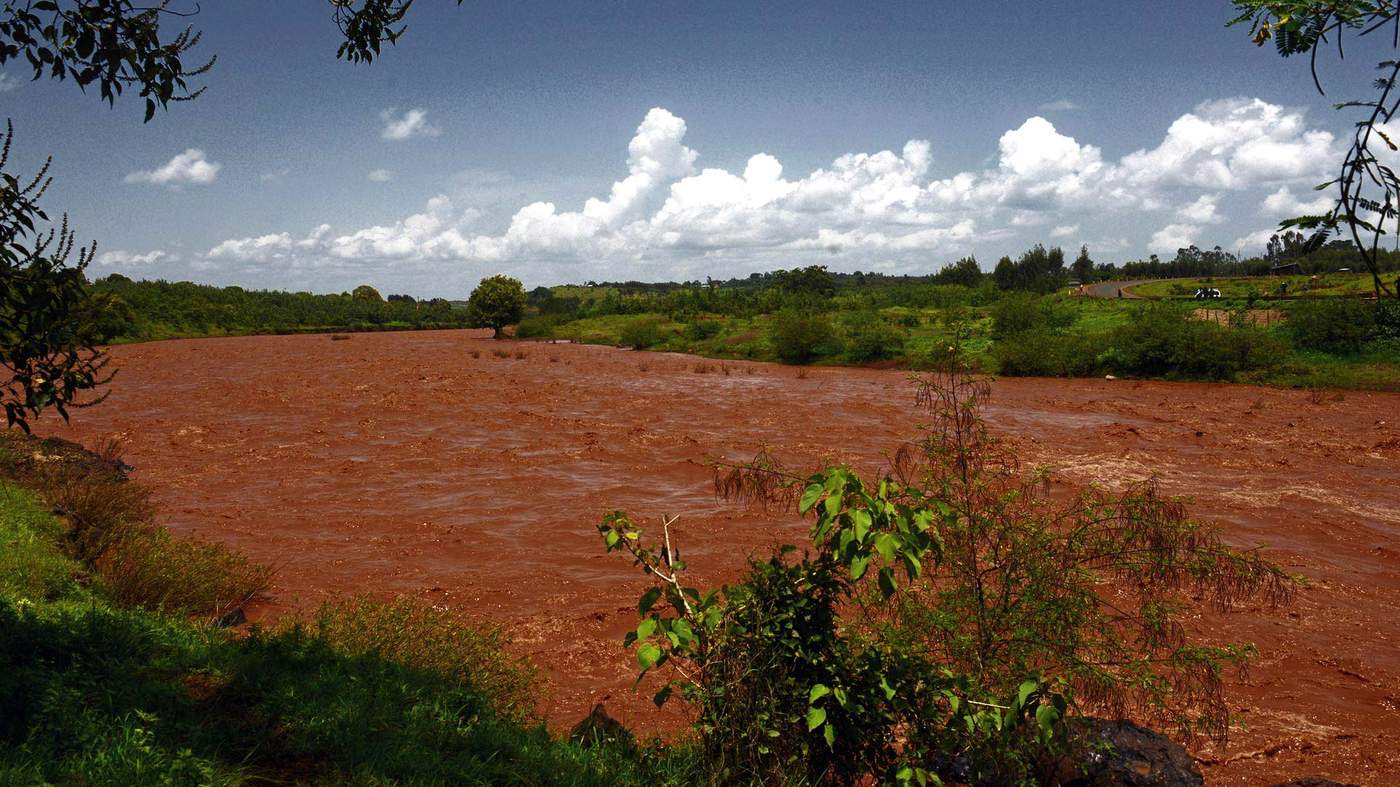
Gushing out of a forest just south of Lake Tana, the Blue Nile greedily soaks up this bounty, quickly swelling from a stream to a torrent.

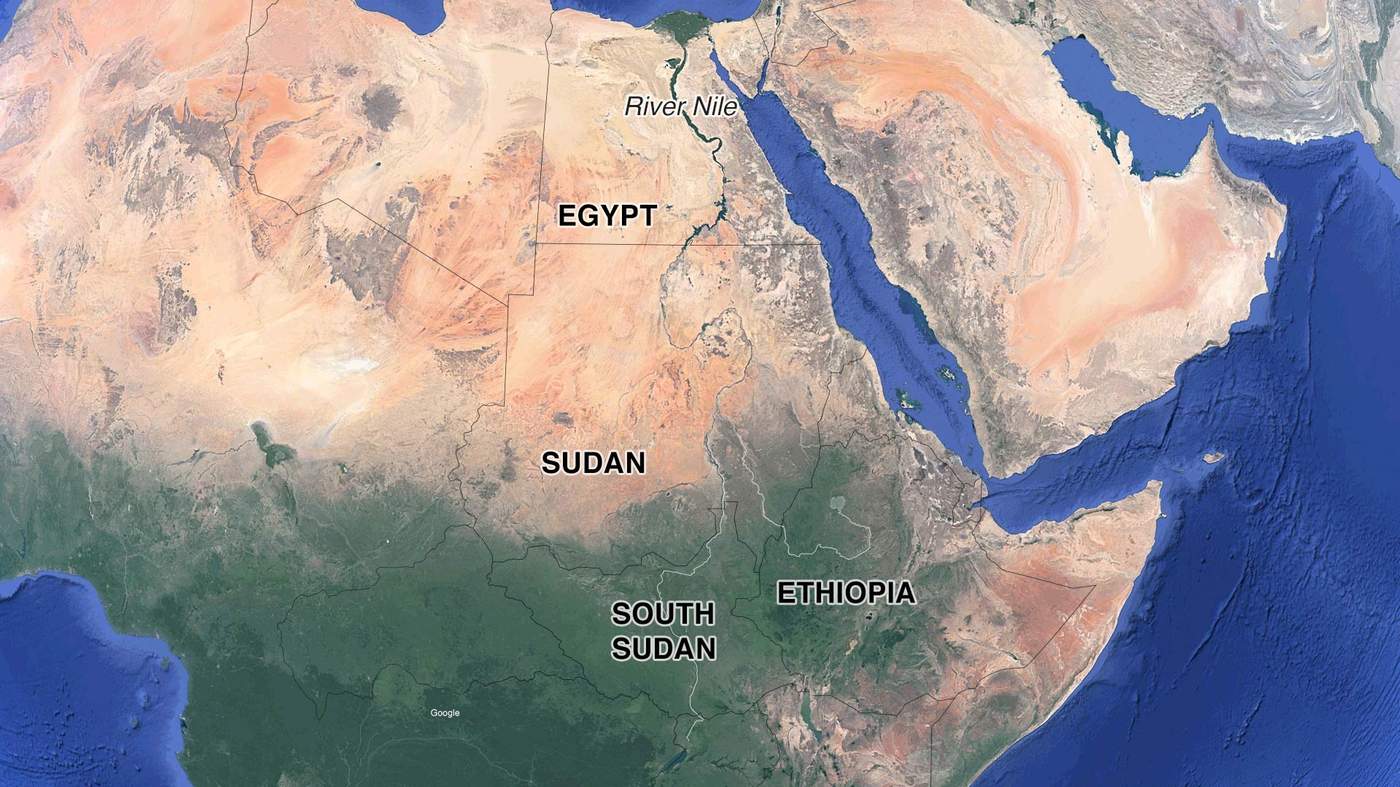
Though slightly longer, the White Nile, which originates in East Africa’s Lake Victoria and merges with the Ethiopian branch at Khartoum, carries a fraction of the volume.

But these rains are not falling as they used to. And that is potentially catastrophic for the entire basin.

The Meher, the long summer wet season, is arriving late, and the shorter rains earlier in the year sometimes not at all.

“It’s so inconsistent now. Sometimes stronger, sometimes lighter, but always different,” said Lakemariam Yohannes Worku, a lecturer and climate researcher at Arba Minch University.

When it does rain, the storms are often fiercer, washing over a billion tons of Ethiopian sediment into the Nile each year, which clogs dams and deprives farmers of much-needed soil nutrients.

Population growth has fuelled this phenomenon, as expanding families fell trees to free up more space and provide construction materials. Monster floods have also become much more common.

As crops wither and food prices soar, many rural communities, who have historically relied on steady rains rather than rivers to irrigate their land, have been pitched even deeper into desperate poverty.

Some villagers have given up on agriculture altogether, trying their luck instead in Bahir Dar, the regional hub – or nine hours’ bus drive away in Addis Ababa, Ethiopia’s booming capital.

Most have simply struggled on, subsisting on reduced rations while hoping against hope that the rains will normalize. Church attendance has increased, a priest told me.

For a small minority, however, enough is enough. Even in poor, out-of-the-way hamlets with no TVs or electricity, many have heard of the possibility of seeking their fortunes in Europe.

After dropping out of school to help his family work their battered farm and selling his prized bicycle to buy new seeds, Getish Adamu, a rake thin 17-year-old from Dangla, near the Blue Nile’s source, is among those considering chancing the perilous desert paths to the Mediterranean.

Getish Adamu is considering his future

Getish Adamu is considering his future

“Myself, I am undecided. I would like to stay with my family,” he said. “But if these rains go on like this, I will not be able to stay.” If the Nile rains continue to ebb and flow, nor will many others.

Dam conflict

The further the Nile goes, the more sordid its problems become.

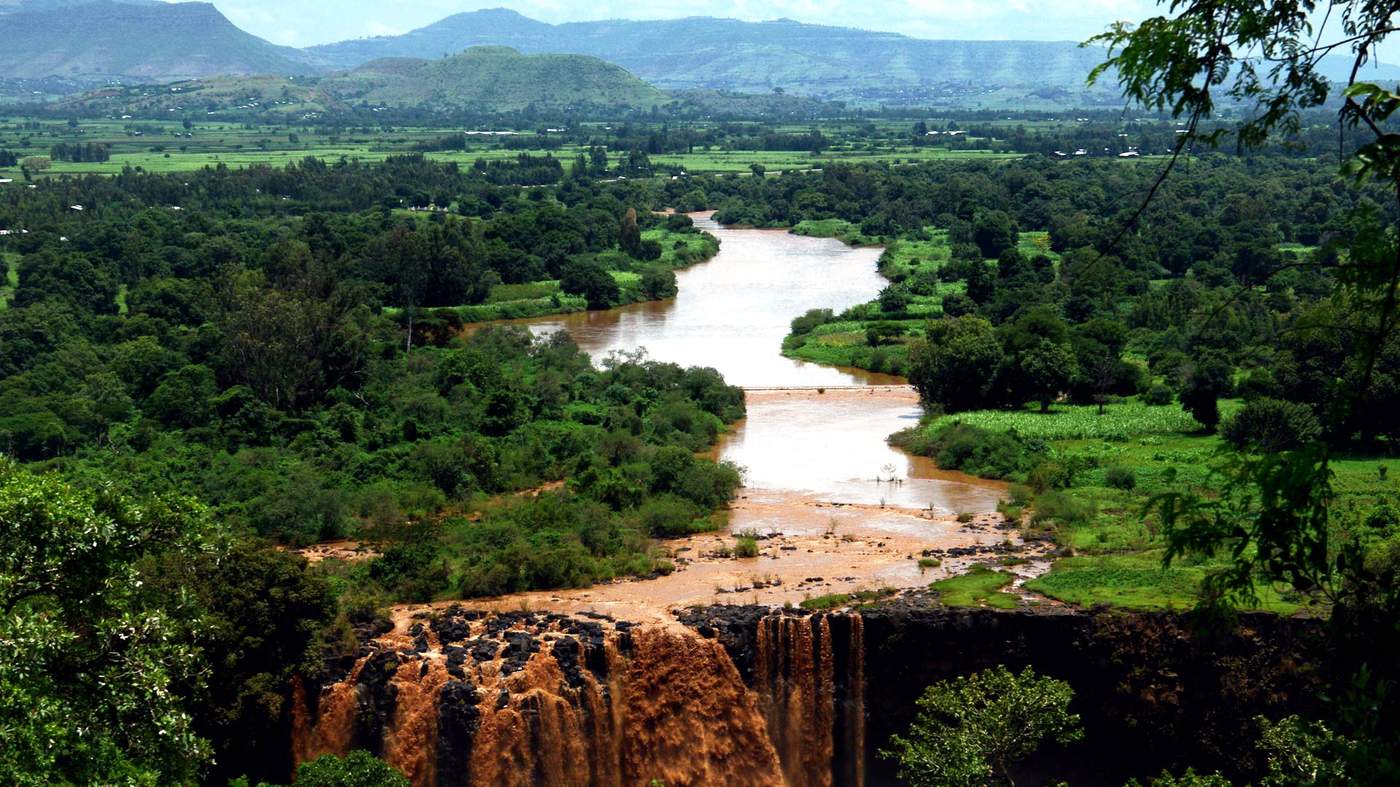
Thirty miles after leaving Lake Tana, the river plunges over the majestic Blue Nile falls, and then enters a long web of deep cliff-lined gorges.

Gathering strength with each arriving tributary, it cascades down 1,500 metres from the highlands to the semi-arid plains below. It is the most beautiful, most isolated and, perhaps, the most troubled portion of the entire basin.

That is because Ethiopia’s sparsely-populated wild west is mired in squabbles both local and international.

From the controversial construction of Africa’s largest dam in the rugged hinterland just shy of the Sudanese border, to Addis Ababa’s alleged displacement of tens of thousands of villagers in order to lease their prime Nile-side land to foreign agribusinesses, an uneasy pall hangs over the entire area.

Just reporting there means navigating a complicated minefield of checkpoints, informants, and terrified interviewees.

“You have to understand there are things we cannot talk about,” said Samuel, a restaurant chef in Injibera, blanching noticeably when asked about nearby land grabs. “These are the questions that get you into trouble.”

He was not exaggerating. Days later, security forces raided my hotel room, taking only my reporting pads (and some of my Snickers stash). On another occasion, I was turned back at a police roadstop near Chagni while trying to reach some of the largest chunks of confiscated farmland.

Of all these hot-button issues, it is the dam – the Grand Ethiopian Renaissance Dam (GERD) – that has really stoked the region’s hopes and fears.

GERD under construction in 2015(Getty Images)

GERD under construction in 2015
(Getty Images)

At a little over a mile long and with a generating capacity of roughly 7GW, the Nile megastructure is seen by many Ethiopians as a tangible illustration of their country’s emergence after the humiliation of the famines in the 1980s and 90s.

Roadside billboards superimposed with politicians’ faces tout its potential to bring electricity to millions; schoolchildren sing about it. “This is our destiny,” some of them chant. Across western Ethiopia, many residents excitedly await their new neighbour.

But to downstream Egypt, which is mostly desert, receives little rain, and consequently relies on the river for more than 95% of its water, the possibility that GERD might cut the Nile’s flow is perceived as an existential crisis.

A 1959 treaty apportioned all Nile waters to Egypt and Sudan, though Ethiopia and the other upstream riverine states dispute its legitimacy, saying it was drawn up in the colonial era when most African countries had little say in their own affairs.

There have been threats of war from Cairo, and fierce sabre-rattling on both sides. If there is ever a regional conflagration over water, this stunning, almost impossibly green stretch of the river will likely be at the heart of it.

“It all looks so peaceful, no?” a naval officer called Moses told me over beers at a shoreline Bahir Dar bar. “But we are all aware that we are on the frontline. This is where the water is, the dam, the best land.”

Despite losing access to the sea when Eritrea broke away in 1991, Ethiopia has maintained a naval facility on Lake Tana. “We might need it in the future,” Moses added, cryptically.

The sprawling cities

Khartoum, where the Blue and White Niles meet

And then there is the human impact.

For Nile travellers, Khartoum has always marked both a necessary and symbolic port of call.

Perched at the point where the Blue and White Niles meet, it is only here that the river finally takes on its broad, sleepy, familiar form. After more than a thousand miles of separation, it is only at this juncture that one can readily identify each branch’s distinctive features.

The Blue Nile, swollen and coloured brown by the Ethiopian rains, roars into the confluence, pushing back for miles its insipid and slightly yellow counterpart. At other times of the year (during the dry season), the two run alongside one another in what some poetic locals refer to as the “longest kiss in history”.

But the reality no longer matches the romance. Because it is also here, in its first meeting with a major metropolis, that the Nile’s water quality begins to falter.

Pummelled with sewage almost from the moment it enters the city, it is in Khartoum that the river receives a rude taster of what soaring population growth will mean for its health.

Egypt’s numbers have more than quadrupled since 1960; Ethiopia is adding roughly 2.5 million new people a year. The basin’s total population is on track to double to 500 million by 2050.

As governments struggle to service their new citizens’ needs, the Nile is soaking up more and more of the shortfall.

“We’ve always treated the river badly, we’ve always assumed it was big enough,” said Youssef Abugroun, an engineer and part-time fisherman, whose regular evening sessions now net him around 10% of his catch a decade ago. “But maybe we’re just too many for that now.”

For the most part, Khartoum’s problems mirror those of other booming Nile cities. The municipal wastewater network has barely grown even as the Sudanese capital’s boundaries have massively expanded over the past few decades.

With inadequate rubbish disposal facilities, factories and businesses have taken matters into their own hands, dumping everything from toxic run-off from nearby munitions plants, to unwanted exotic animal parts from the downtown ivory market, into the muddy, chemical-tainted shallows.

But in Sudan, a fierce crackdown on civil society has compounded the crisis. In 2014, the state jailed the leaders of a consumer protection group after they pushed it too hard. Fearful of suffering a similar fate, the country’s environmentalists have had to temper their pursuit of the worst polluters.

“We do advocacy, sometimes we go to court against government actions,” said Mutasim Bashir Nimir of the Sudanese Environment Conservation Society (SECS),when we met at his organisation’s modest office in south Khartoum. “But we need to balance. We try to survive.”

The encroaching sands

All this before the desert has its say.

Meandering further north, through the Sahara, the Nile settles into a lazy, somnolent rhythm.

It drifts past the Pyramids of Meroe, which stand battered by sandstorms and almost unvisited by tourists, and then on to the Merowe dam. Soon after the fourth cataract, it reaches Karima, supposedly the hottest town on the river.

Working in conditions that are almost calculated to kill any crop, farmers here have learnt to cope with whatever man or nature throws at them.

When the mercury tops 45 C, as it often does by noon, they cultivate their fruit and vegetable plots, most of which survive under thick tree canopies that residents have planted up for this purpose.

When the wobbly power supply cuts out, which frequently happens – especially since the turbines of the Roseires and Sennar dams became stuffed up with Ethiopia’s Nile sediment – they turn to diesel generators to fuel their water pumps.

For every problem, they’ve always found a solution. Until now.

Investment in new technology is helping combat the desert advance 

Investment in new technology is helping combat the desert advance

That is because the desert is eating into the narrow – sometimes only 150 metre-wide – farmable strip along the Nile at an unprecedented pace. The sands are advancing day and night, and the traditional preventative measures, like planting deep-rooted mesquite trees or stringing up fences of yellowing palm leaves around fields, are no longer helping.

Trapped between the devilish dunes and the big blue river, farms are being swallowed whole.

“If they brought the map of the area to the minister of the environment, he wouldn’t recognize anything,” said Osman Abdul Moati, only half-joking, as he showed off the billowing sandbanks that threaten to engulf his wheat fields in the shadow of the holy Jebel Barkal mountain, on Karima’s edge. “The productive land is vanishing.”

Osman Abdul Moati

Osman Abdul Moati

A lot of this appears to be due to climate change, and it is happening up and down the Nile valley.

The desert has marched 120km into the scrubland to the south of Khartoum over the past 30 years, the UN Environment Programme says. Temperatures, too, are hitting outrageous new highs, increasing evaporation from the river.

But in northern Sudan, the situation has reached breaking point in large part because many young farmers, whose labour is needed to keep the desert at bay, have been lured away by the promise of easy riches at nearby gold mines.

In their stead, some landowners have taken on migrants from Ethiopia, Eritrea and the troubled Sudanese region of Darfur, all looking to earn a little additional cash as they make their way north, but others have simply ditched tools and relocated to the cities. This is deeply problematic for a poor country that already shells out money it can ill-afford on wheat imports.

As with Ethiopia’s long-suffering hill farmers, those who have battled on are questioning if it is still worth it. “In the past, summer was summer, and winter was winter, but now everything’s mixed up,” said Awad Hawran, who grows mangoes, sugar cane, dates, and watermelons on a one-and-a-half acre plot aside the Nile.

“It’s hard to continue farming when even the desert and weather are against you.”

Poisoned Sea

So what happens now? Might the Nile’s sorry state one day lead to war?

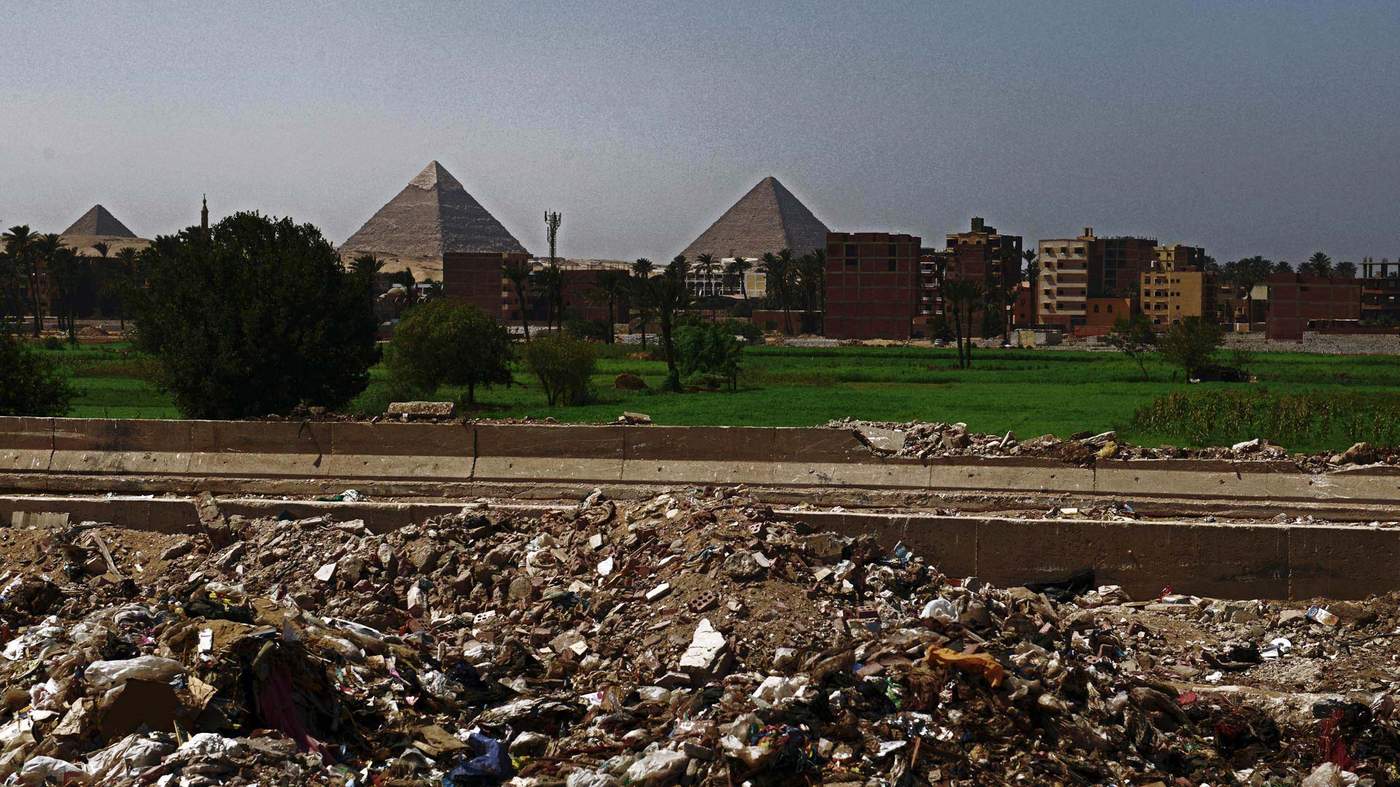
By the time the river reaches Cairo, it is utterly filthy.

The banks are laced with rubbish, and the water is gloopy and often gleaming with toxins. Already, farmers are complaining of water shortages in the northern Delta, as the Nile’s increasingly meagre flow struggles to filter through clogged-up irrigation canals.

To officials staring out from Cairo’s riverside ministries, it is a grim, in-your-face illustration of their country’s precarious water future. “The Nile is everything to us – what we drink, what we eat,” said Ali Menoufi, from the Ministry of Water Resources. “It would be a disaster if anything happened to it.”

The rhetoric and tenor of Nile basin relations over the past few years have reflected the high stakes.

A politician in a previous Egyptian administration called for a strike on Ethiopia’s prized dam in 2013, while state-owned media in Addis Ababa has not been shy about ratcheting up tensions in response.

As GERD has neared completion, authorities in Cairo have bolstered their strategic capabilities, acquiring two French Mistral long range-strike warships in a move that analysts believe is at least partly calculated to send a message to their southern rival.

“All options are on the table,” said Ahmed Abu Zeid, the foreign ministry spokesman and a former Nile talks negotiator, when asked whether military action remains an option.

History suggests that the Nile basin states are unlikely to come to blows over the river any time soon. Transboundary water disputes have a strong record of peaceful resolution, and there are indications that Egypt is reconciling itself to the dam’s inevitability.

However, Ethiopia’s intense secretiveness over GERD’s ramifications remains a stumbling block, as do the negotiations over how long it will take to fill the dam’s enormous reservoir.

And the war of words continues to play out in some unsavoury ways.

Ethiopian Oromo refugees in Egypt report increased harassment whenever GERD hits the news. Some Ethiopian monasteries, including Lake Tana’s island churches, which have traditionally enjoyed close ties with their Coptic Orthodox brethren, have broken off relations, sending Egyptian monks home.

At a time when Sudan is leasing millions of acres of arable Nile-side land to Gulf Arab agribusinesses – at least 2.5 million to the UAE, there are myriad potential banana skins on the road ahead.

“If you think about it. We’re growing and the river’s not,” said Gebremichael Mengistu, an Ethiopian university student I met in Bahir Dar, ably summing up the source of the tension. “It was always going to come to this.”

But there is still enough river for a fittingly bleak end.

For the fishermen who ply their trade around Rosetta, where the western branch seeps into the Mediterranean, the Nile’s shabby state has proven particularly disastrous.

Much of their river catch has died off, and what they do hook looks so unpalatable that they usually won’t eat it. The Nile’s final stretch is so poisonous that even out on the open sea, around the river mouth, few species can survive, fishermen say.

“We worshipped the river, but now we want nothing to do with it,” said Khamees Khalla, untangling his nets steps from the fort where the Rosetta Stone, the key to deciphering hieroglyphics, was found. “We all have the same tactic – get as far away from the river as possible.”

Battered by challenging fishing conditions – and by increased competition as many beleaguered coastal farmers try their hand at sea – some trawlermen have turned to crime.
Twice, Mohammed, a Rosetta-based fisherman, has ferried migrants and refugees part of the way to Europe, and twice he has almost been caught. But with the river no longer the cash cow it once was and people from other struggling parts of the Nile basin willing to pay much more than he earns fishing for safe passage, he insists he is not deterred.

“I would prefer to make my living from the Nile, like my father, like my father’s father, but that’s just not possible any more,” he said.

What Studies in Spatial Development Show in Ethiopia-Part II

Priyanka Kanth's picture

In Part I of our blog —based on a background note we wrote for the World Bank’s 2017–2022 Country Partnership Framework for Ethiopia—we presented our key findings on the spatial or regional distribution of poverty and child malnutrition in Ethiopia.

In Part II of our blog, we look at changes in road density over the ten years from 2006 to 2016, and in nightlights in six cities over four years from 2012 to 2016.

Changes in road density pointed to greater economic concentration towards the center of Ethiopia and the north of the country. These are also areas of greater population density. Figure 2a shows that, between 2006 and 2016, the increase in road density was concentrated in certain regions, notably Ethiopia’s capital of Addis Ababa, as well as Tigray in the north of the country and in Oromia in the center.

Figure 2a: Changes in road density and length between 2006 and 2016

Source: World Bank visualization based on data from various UN agencies

Figure 2b: Rural Access Index (RAI) and major roads in 2016

Source: World Bank visualization based on data RAI (World Bank).

Remote and economically lagging regions, and Amhara Region, see lesser increases in road density. Taking the development of roads as a proxy for the development of infrastructure, this suggests that infrastructure development has not been homogeneous across all regions. It also shows that road connectivity for some regions is poor, both within those regions and with other regions, with consequences for labor mobility, the transportation of goods and services, and for agricultural productivity as the distance and travel times to markets are longer.

Despite the large infrastructure investments undertaken by the Ethiopian government in the past ten years, accessibility by road to rural areas remains low in Ethiopia; we can see its distribution across the country in Figure 2b. The Rural Access Index was 21.6 percent in 2016, signifying that only around 22 percent of the rural population had access within a 2km distance of them to a “decent” road.

Twinkle, twinkle little light

Finally, we look at nightlights in some of the secondary cities. From Figure 3 it could be interpreted that urban GDP is stagnant as there were no significant changes in the density or distribution of night-time lights over the period of 2012–2016, even though urbanization outside Addis Ababa was ongoing and urban poverty has been reduced since 2012.

As per the World Development Report 2009, nightlights are not a good proxy for GDP; however, differences in the pattern of nightlights over a given time are correlated with changes in GDP. In figures 3a-b, we see that the trend of nightlights across several secondary cities in Ethiopia remains constant. Therefore, secondary cities don’t seem to grow in keeping with Addis Ababa, the largest urban center of the country.

Figure 3: Spatial dimension of nightlights
a) Total brightness of nighttime lights

Source: World Bank visualization based on data from NOAA’s VIIRS Satellite.

b) Average brightness of nighttime lights.

Source: World Bank visualization based on data from NOAA’s VIIRS Satellite
The significant increase in GDP witnessed by Ethiopia is primarily due to growth in agriculture in rural areas and in the service sector. The country’s push for developing its manufacturing sector is relatively recent and might explain the figures for secondary cities better. It is likely that secondary cities are witnessing growth in the service sector—and not in industrial or manufacturing sectors—and that this growth is therefore not resulting in any significant changes in the number or density of nightlights.

In addition, the influx of migrants into Addis Ababa is higher than in other secondary cities, suggesting that real and perceived opportunities lag behind in secondary cities.

Combining our analytical findings with our visualization of spatial development, we concluded that spatial development outcomes could be increased through interventions, primarily in four areas, which will we explore in Part III of our blog series.


Data provided by DEC survey unit. Maps produced by the Data Management Unit.

What Studies in Spatial Development Show in Ethiopia-Part II

Priyanka Kanth's picture

In Part I of our blog —based on a background note we wrote for the World Bank’s 2017–2022 Country Partnership Framework for Ethiopia—we presented our key findings on the spatial or regional distribution of poverty and child malnutrition in Ethiopia.

In Part II of our blog, we look at changes in road density over the ten years from 2006 to 2016, and in nightlights in six cities over four years from 2012 to 2016.

Changes in road density pointed to greater economic concentration towards the center of Ethiopia and the north of the country. These are also areas of greater population density. Figure 2a shows that, between 2006 and 2016, the increase in road density was concentrated in certain regions, notably Ethiopia’s capital of Addis Ababa, as well as Tigray in the north of the country and in Oromia in the center.

Figure 2a: Changes in road density and length between 2006 and 2016

Source: World Bank visualization based on data from various UN agencies

Figure 2b: Rural Access Index (RAI) and major roads in 2016

Source: World Bank visualization based on data RAI (World Bank).

Remote and economically lagging regions, and Amhara Region, see lesser increases in road density. Taking the development of roads as a proxy for the development of infrastructure, this suggests that infrastructure development has not been homogeneous across all regions. It also shows that road connectivity for some regions is poor, both within those regions and with other regions, with consequences for labor mobility, the transportation of goods and services, and for agricultural productivity as the distance and travel times to markets are longer.

Despite the large infrastructure investments undertaken by the Ethiopian government in the past ten years, accessibility by road to rural areas remains low in Ethiopia; we can see its distribution across the country in Figure 2b. The Rural Access Index was 21.6 percent in 2016, signifying that only around 22 percent of the rural population had access within a 2km distance of them to a “decent” road.

Twinkle, twinkle little light

Finally, we look at nightlights in some of the secondary cities. From Figure 3 it could be interpreted that urban GDP is stagnant as there were no significant changes in the density or distribution of night-time lights over the period of 2012–2016, even though urbanization outside Addis Ababa was ongoing and urban poverty has been reduced since 2012.

As per the World Development Report 2009, nightlights are not a good proxy for GDP; however, differences in the pattern of nightlights over a given time are correlated with changes in GDP. In figures 3a-b, we see that the trend of nightlights across several secondary cities in Ethiopia remains constant. Therefore, secondary cities don’t seem to grow in keeping with Addis Ababa, the largest urban center of the country.

Figure 3: Spatial dimension of nightlights
a) Total brightness of nighttime lights

Source: World Bank visualization based on data from NOAA’s VIIRS Satellite.

b) Average brightness of nighttime lights.

Source: World Bank visualization based on data from NOAA’s VIIRS Satellite
The significant increase in GDP witnessed by Ethiopia is primarily due to growth in agriculture in rural areas and in the service sector. The country’s push for developing its manufacturing sector is relatively recent and might explain the figures for secondary cities better. It is likely that secondary cities are witnessing growth in the service sector—and not in industrial or manufacturing sectors—and that this growth is therefore not resulting in any significant changes in the number or density of nightlights.

In addition, the influx of migrants into Addis Ababa is higher than in other secondary cities, suggesting that real and perceived opportunities lag behind in secondary cities.

Combining our analytical findings with our visualization of spatial development, we concluded that spatial development outcomes could be increased through interventions, primarily in four areas, which will we explore in Part III of our blog series.


Data provided by DEC survey unit. Maps produced by the Data Management Unit.

Reflecting on ‘The Amhara Psychology’

By  yalmazborsa

Recently, a piece was posted online written by Befeqadu, a blogger, an activist, interested in and usually posting findings, thoughts and ‘feelings’ on issues that strike the average cyber-Ethiopians’ attention. I have a few things to say, and I present some findings that may add some depth to the author’s writing, if in fact he continues to research and engage with the topic. It is only because I genuinely believe he wants to expand his knowledge about this. The last few paragraphs of his piece are convoluted and funky, I am sure not only to me, but also to him, the author. In my last paragraphs, I lay out some things I’ve been noticing, in relation to his piece, but in general to what I feel is happening on social media as well.

Cheers,

Hewan

Befeqadu’s piece was titled ‘The Amhara Psychology’. He starts off with trying to identify and define what contemporary Amhara is in comparison with what it historically represented. Then he highlights how tracing the language might help us pin down the evolution of the people who speak Amharic, an OK approach, but which thereby subtly declares that those who speak it would be those who are called Amhara. He also claims, without citation, that “ [l]egend has it that it was in Shoa, in the 13th century, that the language was first born” and further, that “the language is younger than Cushitic languages that include Afaan Oromo and Somali”. Primarily, it is with respect that I say, one should not make such a bold heading for a piece that isn’t even three pages long and for one which more than factual and evidence based research only presents exhausted theories about the Amhara. How does one understand the psychology of a group of diverse people? (Didn’t we tackle this in anthropology 101)

In the book, Church and State (1270 – 1527) by Taddesse Tamrat, Taddesse uses ‘Amhara’ to represent not the Amharic speaking group, but a Christian ‘advance guards’ that expanded to the south, facing conflicts with the Shewans (64). They are represented differently from the Tigre. He writes “It is apparent that all the Semitic linguistic groups south of the Tigre region had a similar origin. The Amhara tribal group is the most northerly of these communities and was probably the earliest to be established as such”. Taddesse here is explaining the southward expansion of Christians prior to the 9th century, further proving that Amhara did in fact exist before the 9th century. In fact, he continues to write, “the earliest recorded tradition of Christian settlement in the region indicates that there was already a distinct Amhara population…” (37-38). Further, Taddesse writes Yikunno Amlak’s dynasty was comprised of “Amhara and the Christian communities of Shawa” (67). I use this to present a theory, that perhaps the Amhara were not entirely Christian, and could have been pagan, and or Muslim if they had to be identified as their own group here. Or perhaps, the Amhara were their own distinct group, just like the Shewa.

Befeqadu has ignored Church documents in his writing, and I would like to guide his attention to one Gedl, Gedle Teklehaymanot, of the king not the saint. This also mentions the Amhara. It is to be noted that the Gedl was written in the 800s. The roots, Biher, languages and descriptions of the people of Ethiopia are stated in the volumes of Gedle Teklehaymanot.

Other books include: The Ethiopians by Edward Ullendorff states that Amharic has been the “Lesanne Negus” (language of the kings) officially from Yikunno Amlak’s period reign in 1270, although Amharic has been used by the Zagwe Monarchs, Lalibela et al. He presents evidence that Ge’ez and Amharic have co-existed side by side for centuries. “…the evolution of Amharic and the other modern languages can best be envisaged in this way: classical Ethiopic, in the course of time, spread over a fairly large area and, when political and other circumstances were propitious […], eventually became differentiated to such an extent that the varying speech forms were mutually unintelligible” (119). Further, the language may have been made the official national language in the past 100 years, it has been the court language for centuries (124) and its grammar studied by indigenous and foreign scholars since the middle ages. And, to Befeqadu’s list of sources that declare the Amharic language has Cushitic influences, there is solid evidence that its “Semitic stock remains appreciable” in Ullendorf’s book (125).

In Titov’s Modern Amharic Language script of 1976, he writes that there is evidence that the first known Amharic writings were from the 13th century. It should also be noted that even among the EthioSemitic languages, Amharic is classified as among the ‘Southern Semetic languages of Ethiopia, along with Guragigna, Harari, Argoba etc.. The northern Semetic languages are the Tigre, Tigrigna, the old Ethiopic  and Ge’ez’.

In Gedle Qewustos written in the 14th century, there are words such as ስርጓይ which are followed by similar descriptions by church scholars which state «በአገራችን ቋንቋ ይህ እምቧይ ይባላል» referring to Amharic.

For further research, please also refer to Girma Awgichew’s book on Ethiosemetic languages and his thorough discussion of the arguments about the evolution of Amarigna. You can also refer to Kidane Wold Kifle, Nibure-ed Ermias’s ኢትዮጵያ የአለም መፋረጃ and Mesfin Woldemariam’s book which came out 7 years ago, in 2003 E.C (sorry, I forgot the title)

Questions and points of reflection:

To his claim, “people -whatever their ethnic background is – have to be [Orthodox Christians] and speak Amharic to have the maximum chance of taking over leadership”, I say this is partially fabricated. The Solomonic Dynasty has never been based on whether or not one speaks Amharic, and not after Tewodros as well. It mattered most whether one can trace their lineage to the House of David (Asfa-Wossen Assrate 2015; Kebra Nagast) regardless of what language you spoke. [Zagwe was based on ethnicity, Solomonic dynasty was known for intermarriages (consider this as checks and balances).]

Befeqadu’s piece is also filled with chronological confusion. He seems to contradict himself by stating that Oromiffa was used in the Zemene Mesafint time-period, even though he stated that he was discussing post-Tewodross II Ethiopia. This confusion could be emblematic of a deeper confusion of understanding what exactly he is claiming, but that is to be excused.

He then states that Gondar royalties had adopted Catholic Christianity, even though it was only Atse Suseneyos of the 17th century who officially converted and even that after deep chaos in the empire, followed by revolts from all sorts of groups, including the re-known Wellete Petros. Rumour has it that Atse ZeDengil and Atse Ya’ekob had converted but this could have been spread by royalty to simply get rid of them as power rivals. Abune Gorgorious የኢትዮጵያ ቤተክርስትያን ታሪክ and Tsehafee Tezaz Gebreselassie, the first Ethiopian Tsefihet Minister’s books are references. This is also present in the reknown Ethopian historian’s TekleTsadik Mekuria’s volumes, especially ከይኩኖአምላክ እስከ ቴዎድሮስ. Further, he mentions that in Ethiopia’s entire history, it was only Aba Jifar who was able to keep his faith while ruling a province of Ethiopia. What are the sources? Atse Zeria Yakob and Atse Amde Tsion, have gone to the extremes of Adal to expand their country – had accepted Harrar’s and Adals rulers to rule as Muslim Sultans as long as they pay tribute to the central government. Menelik’s is only exceptional because of Aba Jiffar’s proximity to the central government. Orthodox Christianity was the basis on which one could claim the throne. This was, in fact, only changed upon the reign of Haile Selassie, who was the single ruler in Ethiopia’s history to have forced direct familial lineage to legitimize one’s quest for power, to this Teklehawariat, Ras Assrate and several are evidences.

But once again, I repeat, language or ethnicity has never been a factor to rule Ethiopia. The author makes speculations as to why the Tigre could have ruled over Ethiopia. It is interesting that a Church scholar mentioned to me today that this is written in several manuscripts that the Amhara of current Shoa have lineages that go back 4 or 5 generations to the Tigre.

Then again, the author’s chronology is off and one is not quite sure which century he is talking about when he says “Amhara people speak of their birth place (saying I’m Gojjamé, Gondarré, Showayé or Wolloyé)”. Up-to about four decades ago, Amhara had taken to mean ‘Orthodox Christian’ instead of much more (Mesfin Woldemariam). His assumption that one has to ‘amharanize’ oneself then becomes even more confusing. Is he saying that all who speak Amharic will become Amhara? How about his claim that the Amhara themselves don’t necessarily call themselves that. If he is speaking of the language becoming that of a working language in contemporary Ethiopia, then would he say the same for English as it is becoming the global language? Are we Englisizing ourselves, or do we consider that simply a uniting tool for humanity? But this for another discussion.

I believe Befeqadu’s piece took a turn for the worse upon his insulting claim that ‘the common psychological make-up of the Amhara today is pride’.

“The source of this pride is the long standing narration of heroism and leadership opportunity they had. They do have strong sense of ownership to the state. They make proud of the fact that they had central role in forming the Ethiopian state. And, therefore, they don’t like critics of the way Ethiopia is formed. They hate anyone who hates the Imperial rulers and dislike who doesn’t like the state.”

This particular paragraph above is what led me to conclude that Befeqadu’s piece is not educational, nor is it meant to be taken as such. It is his assumptions of what he believes; and the piece a reflection of Befeqadu’s true opinions. No one can be challenged for what they simply assume. He refers to a group he fails to recognize through his “research” as ‘they’. He tells us, the readers, disrespectfully, that the Amhara’s pride is ‘their’ fibre of identity. He repeats that ‘they’ had a central role in forming the Ethiopian state, even-though he himself has been arguing that it could have been true that the ancestors to the Amhara group were not necessarily Amhara. He concludes with what he cannot justify. Should we count the lineage of the rulers of Ethiopia to prove that most of them were not Amhara? Is this what we have come down to?

After this, the author has two to three paragraphs, which frankly I couldn’t clearly understand. Thus, I apologize for the conclusion I am about to draw, considering they may not necessarily be in line with what Befeqadu intended to say. How is it that a group that the author claims as extremely diverse and is collectedly given one name, meant to be individualistic? In fact, how is it then possible for an activist, a reader, to criticize a group where he has done little research on/about/– for being individualistic? Now, where the Amhara came from and what role they had in the state formation needs exhaustive research, but so does the fact that EPRDF’s rule has consolidated the Amhara to mean more than what it meant a hundred years ago. People should not assume the psyche of a vast group of people based on ‘ethno-nationalists’ they meet online. I say this, because I do not believe Befeqadu understands any group of people, especially not the people of Wello, or Gojjam, or Gondar, or Shewa entirely to have warranted him to write that they are proud and have a growingly ‘Amhara nationalism’.

Finally, my 2, 3, 4, +… cents.

I do not see much difference in forced narrations of history and Bef’s extremely bold 2 page writing on the Amhara Psychology. They both enforce things that are not necessarily factual, with unclear methodology and basically non-existent research. Doesn’t this counter what Befeqadu claims to stand for?

Also consider this: why has there been a growing trend to automatically disregard or insult Befeqadu’s or his friends’ writings recently? If a large group of people on social media are constantly revoking what you write, whether or not you are on point, then it could be people do not feel represented by what you present. If people state, over and over again, that their activists do not represent them, then there is clearly something off.

This is simply a post by someone who wanted to comment on things he views and hears and reads. Levine and other anthropological scholars are not enough to write about Ethiopia. Truthfully, I was more shocked by the amount of people he reached on social media than by the contents of his writings. If, I for one, know that I have so many followers, I would do further research and present my audience a respectful and thought-out piece. As a point of departure, if ever Befeqadu gets around to responding to this, I would like to ask, what exactly is the motif for this piece? Will you go on further to write about the Tigre Psyche? Or the Oromo Psychology? And won’t it be divisive to try to discuss such narrow definitions of ourselves?

I also suggest we come back to our own sources as well. The Orthodox Church has documents that we can use to analyze and discuss our past and which are accessible; we cannot only read Leslau and Levine and claim to know Ethiopia. Diversify your sources, dear Befeqadu, time and time again, there seems to be a debilitating Eurocentric approach you use in your writings. Ethiopia’s history is reconstructed from Ge’ez books.

Also, as a final question: why wasn’t this written in Amharic? Is there a reason for using English? I’m using English because my background forces me to be comfortable with English than Amharic. This I ask because your one comment to a friend’s latest book was that ‘to reach majority readers, he should have written in Amharic’.

Regardless, we appreciate the effort and I personally thank you for providing me with evidence that if I am ever to write about Ethiopians, I have to be simply careful with my research.

Selam

Reflecting on ‘The Amhara Psychology’

By  yalmazborsa

Recently, a piece was posted online written by Befeqadu, a blogger, an activist, interested in and usually posting findings, thoughts and ‘feelings’ on issues that strike the average cyber-Ethiopians’ attention. I have a few things to say, and I present some findings that may add some depth to the author’s writing, if in fact he continues to research and engage with the topic. It is only because I genuinely believe he wants to expand his knowledge about this. The last few paragraphs of his piece are convoluted and funky, I am sure not only to me, but also to him, the author. In my last paragraphs, I lay out some things I’ve been noticing, in relation to his piece, but in general to what I feel is happening on social media as well.

Cheers,

Hewan

Befeqadu’s piece was titled ‘The Amhara Psychology’. He starts off with trying to identify and define what contemporary Amhara is in comparison with what it historically represented. Then he highlights how tracing the language might help us pin down the evolution of the people who speak Amharic, an OK approach, but which thereby subtly declares that those who speak it would be those who are called Amhara. He also claims, without citation, that “ [l]egend has it that it was in Shoa, in the 13th century, that the language was first born” and further, that “the language is younger than Cushitic languages that include Afaan Oromo and Somali”. Primarily, it is with respect that I say, one should not make such a bold heading for a piece that isn’t even three pages long and for one which more than factual and evidence based research only presents exhausted theories about the Amhara. How does one understand the psychology of a group of diverse people? (Didn’t we tackle this in anthropology 101)

In the book, Church and State (1270 – 1527) by Taddesse Tamrat, Taddesse uses ‘Amhara’ to represent not the Amharic speaking group, but a Christian ‘advance guards’ that expanded to the south, facing conflicts with the Shewans (64). They are represented differently from the Tigre. He writes “It is apparent that all the Semitic linguistic groups south of the Tigre region had a similar origin. The Amhara tribal group is the most northerly of these communities and was probably the earliest to be established as such”. Taddesse here is explaining the southward expansion of Christians prior to the 9th century, further proving that Amhara did in fact exist before the 9th century. In fact, he continues to write, “the earliest recorded tradition of Christian settlement in the region indicates that there was already a distinct Amhara population…” (37-38). Further, Taddesse writes Yikunno Amlak’s dynasty was comprised of “Amhara and the Christian communities of Shawa” (67). I use this to present a theory, that perhaps the Amhara were not entirely Christian, and could have been pagan, and or Muslim if they had to be identified as their own group here. Or perhaps, the Amhara were their own distinct group, just like the Shewa.

Befeqadu has ignored Church documents in his writing, and I would like to guide his attention to one Gedl, Gedle Teklehaymanot, of the king not the saint. This also mentions the Amhara. It is to be noted that the Gedl was written in the 800s. The roots, Biher, languages and descriptions of the people of Ethiopia are stated in the volumes of Gedle Teklehaymanot.

Other books include: The Ethiopians by Edward Ullendorff states that Amharic has been the “Lesanne Negus” (language of the kings) officially from Yikunno Amlak’s period reign in 1270, although Amharic has been used by the Zagwe Monarchs, Lalibela et al. He presents evidence that Ge’ez and Amharic have co-existed side by side for centuries. “…the evolution of Amharic and the other modern languages can best be envisaged in this way: classical Ethiopic, in the course of time, spread over a fairly large area and, when political and other circumstances were propitious […], eventually became differentiated to such an extent that the varying speech forms were mutually unintelligible” (119). Further, the language may have been made the official national language in the past 100 years, it has been the court language for centuries (124) and its grammar studied by indigenous and foreign scholars since the middle ages. And, to Befeqadu’s list of sources that declare the Amharic language has Cushitic influences, there is solid evidence that its “Semitic stock remains appreciable” in Ullendorf’s book (125).

In Titov’s Modern Amharic Language script of 1976, he writes that there is evidence that the first known Amharic writings were from the 13th century. It should also be noted that even among the EthioSemitic languages, Amharic is classified as among the ‘Southern Semetic languages of Ethiopia, along with Guragigna, Harari, Argoba etc.. The northern Semetic languages are the Tigre, Tigrigna, the old Ethiopic  and Ge’ez’.

In Gedle Qewustos written in the 14th century, there are words such as ስርጓይ which are followed by similar descriptions by church scholars which state «በአገራችን ቋንቋ ይህ እምቧይ ይባላል» referring to Amharic.

For further research, please also refer to Girma Awgichew’s book on Ethiosemetic languages and his thorough discussion of the arguments about the evolution of Amarigna. You can also refer to Kidane Wold Kifle, Nibure-ed Ermias’s ኢትዮጵያ የአለም መፋረጃ and Mesfin Woldemariam’s book which came out 7 years ago, in 2003 E.C (sorry, I forgot the title)

Questions and points of reflection:

To his claim, “people -whatever their ethnic background is – have to be [Orthodox Christians] and speak Amharic to have the maximum chance of taking over leadership”, I say this is partially fabricated. The Solomonic Dynasty has never been based on whether or not one speaks Amharic, and not after Tewodros as well. It mattered most whether one can trace their lineage to the House of David (Asfa-Wossen Assrate 2015; Kebra Nagast) regardless of what language you spoke. [Zagwe was based on ethnicity, Solomonic dynasty was known for intermarriages (consider this as checks and balances).]

Befeqadu’s piece is also filled with chronological confusion. He seems to contradict himself by stating that Oromiffa was used in the Zemene Mesafint time-period, even though he stated that he was discussing post-Tewodross II Ethiopia. This confusion could be emblematic of a deeper confusion of understanding what exactly he is claiming, but that is to be excused.

He then states that Gondar royalties had adopted Catholic Christianity, even though it was only Atse Suseneyos of the 17th century who officially converted and even that after deep chaos in the empire, followed by revolts from all sorts of groups, including the re-known Wellete Petros. Rumour has it that Atse ZeDengil and Atse Ya’ekob had converted but this could have been spread by royalty to simply get rid of them as power rivals. Abune Gorgorious የኢትዮጵያ ቤተክርስትያን ታሪክ and Tsehafee Tezaz Gebreselassie, the first Ethiopian Tsefihet Minister’s books are references. This is also present in the reknown Ethopian historian’s TekleTsadik Mekuria’s volumes, especially ከይኩኖአምላክ እስከ ቴዎድሮስ. Further, he mentions that in Ethiopia’s entire history, it was only Aba Jifar who was able to keep his faith while ruling a province of Ethiopia. What are the sources? Atse Zeria Yakob and Atse Amde Tsion, have gone to the extremes of Adal to expand their country – had accepted Harrar’s and Adals rulers to rule as Muslim Sultans as long as they pay tribute to the central government. Menelik’s is only exceptional because of Aba Jiffar’s proximity to the central government. Orthodox Christianity was the basis on which one could claim the throne. This was, in fact, only changed upon the reign of Haile Selassie, who was the single ruler in Ethiopia’s history to have forced direct familial lineage to legitimize one’s quest for power, to this Teklehawariat, Ras Assrate and several are evidences.

But once again, I repeat, language or ethnicity has never been a factor to rule Ethiopia. The author makes speculations as to why the Tigre could have ruled over Ethiopia. It is interesting that a Church scholar mentioned to me today that this is written in several manuscripts that the Amhara of current Shoa have lineages that go back 4 or 5 generations to the Tigre.

Then again, the author’s chronology is off and one is not quite sure which century he is talking about when he says “Amhara people speak of their birth place (saying I’m Gojjamé, Gondarré, Showayé or Wolloyé)”. Up-to about four decades ago, Amhara had taken to mean ‘Orthodox Christian’ instead of much more (Mesfin Woldemariam). His assumption that one has to ‘amharanize’ oneself then becomes even more confusing. Is he saying that all who speak Amharic will become Amhara? How about his claim that the Amhara themselves don’t necessarily call themselves that. If he is speaking of the language becoming that of a working language in contemporary Ethiopia, then would he say the same for English as it is becoming the global language? Are we Englisizing ourselves, or do we consider that simply a uniting tool for humanity? But this for another discussion.

I believe Befeqadu’s piece took a turn for the worse upon his insulting claim that ‘the common psychological make-up of the Amhara today is pride’.

“The source of this pride is the long standing narration of heroism and leadership opportunity they had. They do have strong sense of ownership to the state. They make proud of the fact that they had central role in forming the Ethiopian state. And, therefore, they don’t like critics of the way Ethiopia is formed. They hate anyone who hates the Imperial rulers and dislike who doesn’t like the state.”

This particular paragraph above is what led me to conclude that Befeqadu’s piece is not educational, nor is it meant to be taken as such. It is his assumptions of what he believes; and the piece a reflection of Befeqadu’s true opinions. No one can be challenged for what they simply assume. He refers to a group he fails to recognize through his “research” as ‘they’. He tells us, the readers, disrespectfully, that the Amhara’s pride is ‘their’ fibre of identity. He repeats that ‘they’ had a central role in forming the Ethiopian state, even-though he himself has been arguing that it could have been true that the ancestors to the Amhara group were not necessarily Amhara. He concludes with what he cannot justify. Should we count the lineage of the rulers of Ethiopia to prove that most of them were not Amhara? Is this what we have come down to?

After this, the author has two to three paragraphs, which frankly I couldn’t clearly understand. Thus, I apologize for the conclusion I am about to draw, considering they may not necessarily be in line with what Befeqadu intended to say. How is it that a group that the author claims as extremely diverse and is collectedly given one name, meant to be individualistic? In fact, how is it then possible for an activist, a reader, to criticize a group where he has done little research on/about/– for being individualistic? Now, where the Amhara came from and what role they had in the state formation needs exhaustive research, but so does the fact that EPRDF’s rule has consolidated the Amhara to mean more than what it meant a hundred years ago. People should not assume the psyche of a vast group of people based on ‘ethno-nationalists’ they meet online. I say this, because I do not believe Befeqadu understands any group of people, especially not the people of Wello, or Gojjam, or Gondar, or Shewa entirely to have warranted him to write that they are proud and have a growingly ‘Amhara nationalism’.

Finally, my 2, 3, 4, +… cents.

I do not see much difference in forced narrations of history and Bef’s extremely bold 2 page writing on the Amhara Psychology. They both enforce things that are not necessarily factual, with unclear methodology and basically non-existent research. Doesn’t this counter what Befeqadu claims to stand for?

Also consider this: why has there been a growing trend to automatically disregard or insult Befeqadu’s or his friends’ writings recently? If a large group of people on social media are constantly revoking what you write, whether or not you are on point, then it could be people do not feel represented by what you present. If people state, over and over again, that their activists do not represent them, then there is clearly something off.

This is simply a post by someone who wanted to comment on things he views and hears and reads. Levine and other anthropological scholars are not enough to write about Ethiopia. Truthfully, I was more shocked by the amount of people he reached on social media than by the contents of his writings. If, I for one, know that I have so many followers, I would do further research and present my audience a respectful and thought-out piece. As a point of departure, if ever Befeqadu gets around to responding to this, I would like to ask, what exactly is the motif for this piece? Will you go on further to write about the Tigre Psyche? Or the Oromo Psychology? And won’t it be divisive to try to discuss such narrow definitions of ourselves?

I also suggest we come back to our own sources as well. The Orthodox Church has documents that we can use to analyze and discuss our past and which are accessible; we cannot only read Leslau and Levine and claim to know Ethiopia. Diversify your sources, dear Befeqadu, time and time again, there seems to be a debilitating Eurocentric approach you use in your writings. Ethiopia’s history is reconstructed from Ge’ez books.

Also, as a final question: why wasn’t this written in Amharic? Is there a reason for using English? I’m using English because my background forces me to be comfortable with English than Amharic. This I ask because your one comment to a friend’s latest book was that ‘to reach majority readers, he should have written in Amharic’.

Regardless, we appreciate the effort and I personally thank you for providing me with evidence that if I am ever to write about Ethiopians, I have to be simply careful with my research.

Selam